
MultiChart combines two to four charts inside a single block with a shared title, subtitle, legend, and source footer. Each panel is an independent chart instance — Line, Bar, or any other type — arranged in a CSS grid.
Usage
new RareCharts.MultiChart('#container', {
  title:    'A Selloff Takes Shape',
  subtitle: 'Selling intensified on the second day of trading',
  source:   'Bloomberg',
  columns:  2,         // 1 – 4 columns
  chartHeight: 200,    // height of each cell in px

  charts: [
    {
      type:  'Line',
      title: 'Brent Crude',
      data:  brentData,
      options: { yPrefix: '$', lineColor: '#00aaff' },
    },
    {
      type:  'Line',
      title: 'DXY Dollar Index',
      data:  dxyData,
    },
    {
      type:  'Bar',
      title: 'Monthly Volumes',
      data:  volumeData,
      options: { barColor: '#00aaff' },
    },
  ],
});
Each child chart is accessible via mc.charts[index] after construction, so individual panels can be updated independently:
mc.charts[0].setData(newBrentData);Or update all panels in a single call:
mc.setData([brentData, dxyData, ftseData, volumeData]);Responsive layout
MultiChart automatically switches to a single column when the container width reaches the breakpoint (default 480 px). No extra configuration needed — on desktop you get two columns, on mobile everything stacks vertically.
Use mobileOptions on any chart descriptor to override that panel's options when the narrow layout is active. The most common use case is restoring hidden Y-axis labels on panels that suppressed them in the side-by-side view:
{
  type: 'Bar',
  title: 'Women',
  options: {
    showYAxis: false,   // hidden on desktop — Men chart already shows the labels
    margin: { left: 0 },
  },
  mobileOptions: {
    showYAxis: true,    // restored on mobile — chart stands alone
    margin: { left: 100 },
  },
}
Side-by-side horizontal bar charts are a natural fit for group comparisons where labels are shared. Suppress the Y axis on panels after the first to keep things clean:
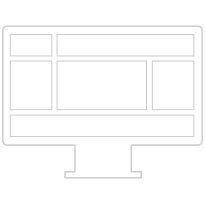
When you need a third panel, the span field on a chart descriptor stretches that cell across all grid columns — a clean way to place a summary chart above two detail panels:
MultiChart options
Common options shared by all chart types (title, subtitle, legend, legendPosition, source, theme) are documented on the Settings page.
| Option | Type | Default | Description |
|---|---|---|---|
Layout |
|||
columns |
1–4 | 2 |
Number of grid columns on desktop. |
mobileColumns |
number | 1 |
Column count when the container is at or below mobileBreakpoint. |
mobileBreakpoint |
number | 480 |
Container width in px at which the grid switches to mobileColumns. |
chartHeight |
number | 200 |
Height of each chart cell in px. |
gap |
number | string | --space-lg |
Grid gap between cells — a px number or any CSS value. |
Charts |
|||
charts |
array | [] |
Array of chart descriptor objects — see table below. |
Chart descriptor fields
Each object in the charts array defines one panel:
| Field | Type | Default | Description |
|---|---|---|---|
type |
'Line' | 'Bar' |
'Line' |
Chart class to instantiate for this cell. |
title |
string | — | Label shown above the cell in small uppercase. |
span |
number | — | Column span for this cell. Set to the number of grid columns (e.g. span: 2) to stretch it full width. |
data |
array | — | Passed to setData() immediately after construction. |
options |
object | — | Forwarded to the child chart constructor. All standard Line and Bar options apply. |
mobileOptions |
object | — | Merged over options when the container is at or below mobileBreakpoint. Restored to options values when the container widens again. Supports all the same keys as options, including margin. |